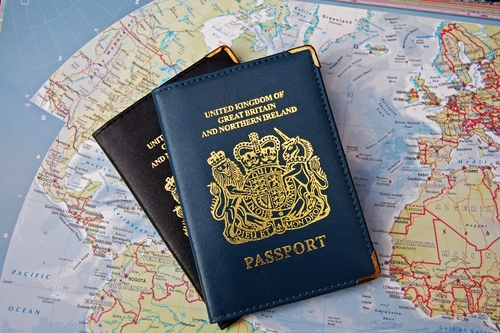
Easter is one of the busiest periods of the year for international travel. For separated parents, however, it can also become a legal flashpoint.
Family lawyers are bracing for a rise in disputes this year, as last-minute holiday plans collide with geopolitical instability. Ongoing tensions in the Middle East have already disrupted flight routes and schedules, increasing the risk that carefully agreed travel arrangements could unravel.
For many separated families, school holidays are shared informally, with trips often agreed quickly by text or email. Whilst there is nothing wrong with this approach, these arrangements can quickly come under strain when flights are cancelled or return journeys delayed. What begins as a straightforward holiday can escalate if one parent believes a child has been taken abroad, or kept abroad, without proper consent.
What counts as permission?
In England and Wales, a parent must have the consent of everyone with parental responsibility before taking a child out of England, unless a court order says otherwise. Under the Child Abduction Act 1984, it is a criminal offence to remove a child without the required consent.
In practice, many parents rely on informal agreements. A text message or WhatsApp exchange may seem sufficient, particularly where relations are amicable, but these arrangements rarely address contingencies.
Consent to travel is not open-ended. Permission for a holiday abroad is usually for a child to be away for a specific purpose, and for a defined period. Once that period expires the legal basis for the child remaining abroad may fall away. Even where the initial trip was agreed, staying beyond the agreed return date without renewed consent can amount to wrongful retention.
Consent should therefore be clear and specific, covering destination, dates and return arrangements. Where trust is fragile, or the destination higher risk, advance legal agreement can provide clarity and prevent matters escalating later.
When does a holiday become ‘abduction’?
The legal threshold is lower than many parents expect. A trip that was initially agreed can become problematic if a child is not returned at the agreed time. In legal terms, this may amount to “wrongful retention”. Under international law, courts can order the swift return of a child to their country of habitual residence, often within weeks.
While courts recognise that genuine disruption can occur, parents are expected to communicate openly and keep the other parent informed. Silence, or unilateral decisions to extend a stay, can quickly give rise to serious allegations. Proceedings can be issued rapidly and in some cases, criminal liability may also arise.
Why caution matters more this year
Current geopolitical instability adds a further layer of risk. Delays caused by airspace closures or cancelled flights may be outside a parent’s control, but they do not remove the need for transparency and cooperation and parents should build contingency into travel plans.
It is also important to consider the destination. Many countries are signatories to the Hague Convention, which provides a legal framework for the prompt return of children wrongfully retained abroad, others are not. Several popular destinations in or near current geopolitical hotspots – including parts of the Middle East and North Africa – fall outside that framework. If a child is taken to a non-Hague country, there may be no reliable court process to secure their return, making disputes slower to resolve.
New passport rules complicate matters further
Recent changes to UK travel rules have only added complexity. From February 2026, dual-national children must travel with a valid British passport to re-enter the UK.
Whilst a seemingly minor adjustment, in practice, this gives significant leverage to the parent holding that passport. If it is not available, a child may be refused boarding, even where travel has been agreed.
Planning is protection
Planning ahead as far as possible means Easter holiday arrangements should not end in court proceedings, but in a year marked by international uncertainty, the risks are higher than usual. For separated parents, the message is clear: plan carefully, document agreements properly and seek professional advice for added certainty.
The article was first published in The Yorkshire Post and can be viewed here: https://www.yorkshirepost.co.uk/business/why-middle-east-conflict-may-fuel-disputes-among-separated-parents-taking-children-abroad-656524
You can find further information regarding our expertise, experience and team on our Divorce and Family pages.
If you require assistance from our team, please contact us or alternatively request a call back from one of our lawyers by submitting this form.