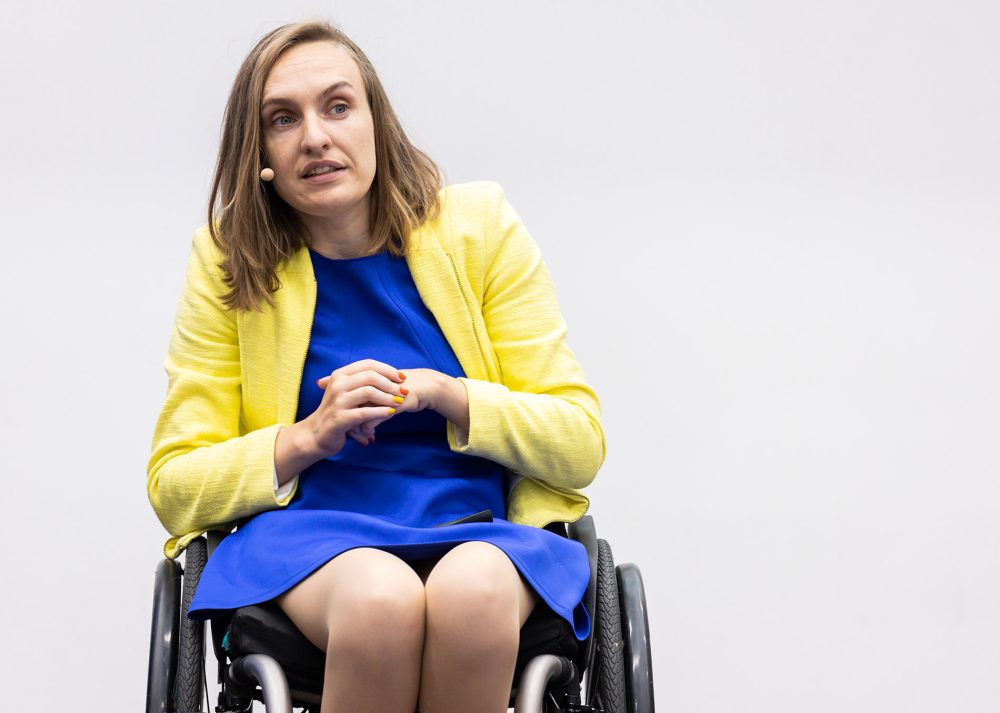
A disabled charity leader from Oxfordshire risks being unable to carry out her professional role after the NHS said it cannot support her care outside the UK.
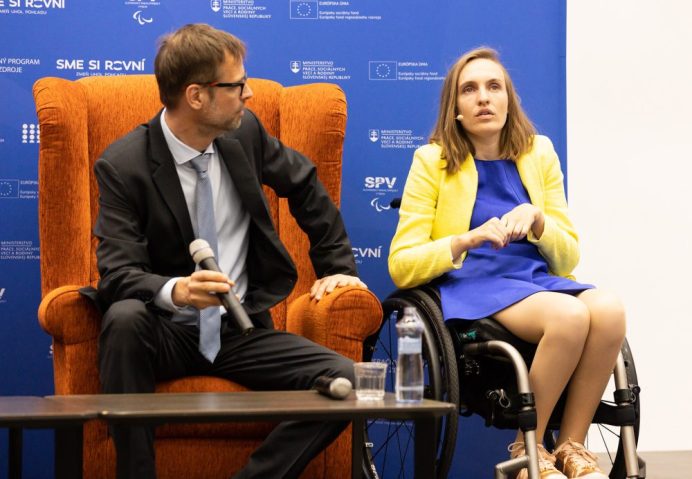
Lucy Robinson, President of the European Spinal Cord Injury Federation (ESCIF), was invited to be the keynote speaker at the European Spinal Psychologists Association conference in Murnau, Germany, which took place on 23-24 April 2026. Speaking at the conference forms a core part of her role representing disabled people at an international level.
Without timely approval from the NHS, Lucy risked missing the conference and facing further barriers to future international work. She is also required to attend the European Spinal Cord Injury Federation Conference in Italy later this May.
Stewarts is representing Lucy on a pro bono basis in an application to the Integrated Care Board (ICB), seeking permission for her to attend the conference with the care she requires. The case highlights the wider systemic barriers that disabled professionals can face when travelling abroad for work.
Delays and refusal of care arrangements
Lucy’s Personal Health Budget was removed in July 2025. As a result, responsibility for submitting a travel risk assessment now sits with the care provider selected by the ICB. Although Lucy’s care company notified the ICB in December 2025 of her need to travel to both Germany and Italy, the request was subject to months of delay.
On 10 April 2026, just weeks before the Germany conference, Lucy was informed that the proposed care arrangements would not be approved.
In its decision letter, the ICB stated that NHS funding responsibilities “cease at the UK border” and that care delivered overseas cannot be authorised under its current policy.
Under NHS Continuing Healthcare, the NHS is responsible for meeting an individual’s assessed care needs. While ICBs are not required to cover the additional costs of providing care overseas, Lucy is not requesting any extra NHS funding. All travel‑related costs would be covered by Lucy herself and the conference organisers.
Impact on independence and ability to work
As a result of the refusal, Lucy has been forced to rely on family members to provide care while she is in Germany, rather than her usual specialist care from trained professionals.
Lucy commented:
“This isn’t a holiday – it’s my work. I’ve been invited to speak internationally about disability and lived experience, yet I’ve been told I can’t take the usual care I receive outside the UK.
“I’m not asking the NHS to fund my trip. I simply need to be able to travel with the support I already receive. My freedoms are restricted, and I am caught in a system that penalises me for wanting to work.”
The situation has been compounded by late requests for additional information. Although the ICB was first notified of the trip in December, further questions were not raised until April — just weeks before Lucy was due to travel.
Legal challenge and wider implications
Jodee Mayer, Pro Bono Manager at Stewarts, said:
“Lucy is not asking for additional NHS funding, yet the process has still prevented her from making basic arrangements to carry out her role as President of ESCIF.
“The ICB told Lucy that it needed to be notified of any overseas trip at least six months in advance, which places significant restrictions on her independence as a working professional. However, Lucy was not informed of this requirement until after submitting her request in December, and the application was later refused on the basis that care cannot be supported outside the UK.
“Despite the refusal, Lucy is now planning to attend the conference with her mother acting as her primary carer, alongside support she is arranging locally in Germany. This means her family must step in to provide care that would otherwise form part of her assessed support.”
Why this matters under equality law
Jodee continues:
“This issue has wider implications for disabled professionals whose work requires travel. The Equality Act 2010 places duties on public bodies to avoid policies that place disabled people at a substantial disadvantage and to consider reasonable adjustments. Where care policies restrict overseas travel, even without additional cost, they may limit disabled people’s ability to work equally, particularly in senior or international roles.”
In addition, public bodies are subject to the Public Sector Equality Duty under the Equality Act 2010, which requires them to have due regard to the need to eliminate discrimination and to advance equality of opportunity for disabled people.
Support from the spinal injury community
Carol Barraclough from the Spinal Injuries Association added:
“Lucy is representing the UK on an international stage and advocating for disabled people across Europe.
Situations like this risk excluding disabled people from opportunities others take for granted, particularly when they are simply trying to do their job.”
Dr Jane Duff, Consultant Clinical Psychologist at the National Spinal Injuries Unit and Chair of the European Spinal Psychology Association, stated: “Lucy was invited as the president of ESCIF an umbrella organisation representing people with SCI across Europe. It is incredibly important that the voices of people with lived experience are included in knowledge sharing and the improvement of clinical services across Europe and globally. Peer support is internationally recognised as an essential intervention in the rehabilitation of people with spinal cord injury, as set out by the World Health Organization. It is therefore a great shame that Lucy is facing significant barriers to continuing this important work.”
You can read more about Lucy’s story here on Hits Radio and BBC.