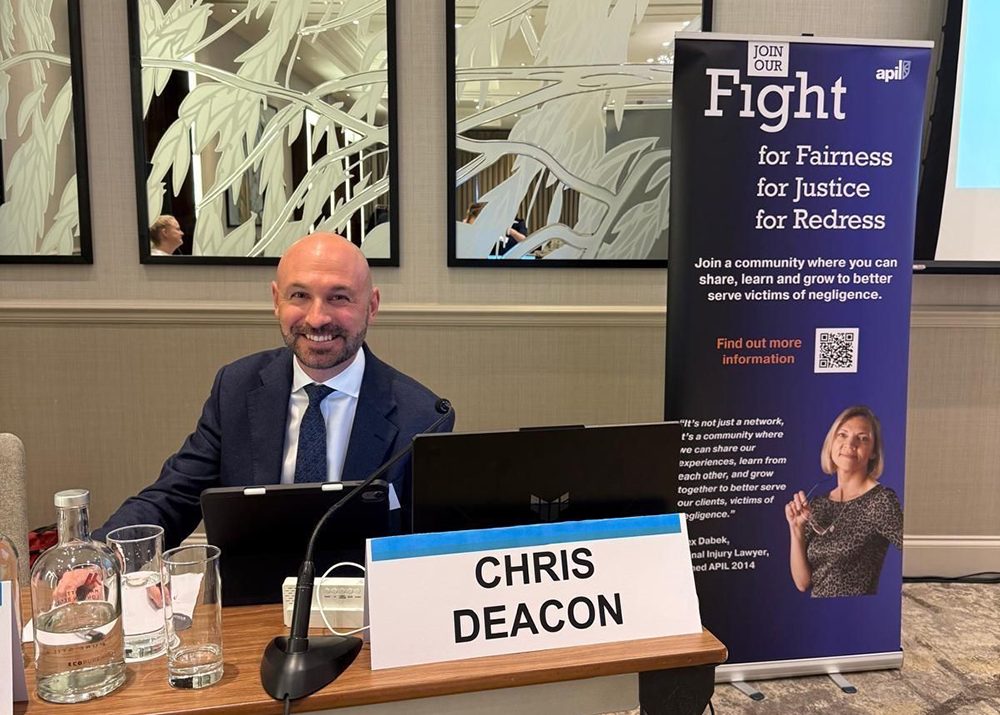
As part of our Day in the Life series, we speak with Chris Deacon, a partner in Stewarts’ Aviation & International Injury department. Chris reflects on his career journey to date and provides an insight into what a typical day looks like for a partner working in this specialist area.
Introduction
2026 marks 15 years since I qualified as a solicitor, and next year it will be 20 years since I started working in the field of international injury and travel litigation. I can only look back with pride at the results my colleagues and I have secured for our clients and look forward in anticipation of what is still to come in a role where you never quite know what each day might bring. I have been privileged to represent so many remarkable and truly inspiring individuals. There have undoubtedly been some seminal, career-defining moments (among them securing justice for the family of Formula 1 driver Jules Bianchi), but the hardest fights are not always about the biggest names or numbers. It is about the lifelong impact our work can have on individuals going through significant upheaval and adversity.
5.30am – an early start
It’s early on a Wednesday morning and my alarm has gone off a good hour earlier than usual. I have a call with lawyers in Melbourne about a potential new case for a UK citizen who has sustained life-changing injuries while working in Australia. To accommodate their working hours on the opposite side of the globe, I have agreed to an early call London-time.
It was a similar pattern of early starts at the end of last year. I was preparing for a settlement meeting for a couple living in Australia who sustained life-changing injuries during a visit to England. The build-up to a settlement meeting can be intense. With two significant cases due to be negotiated on the same day and 13 expert reports and two detailed schedules of loss to be served in good time before the meeting, the team working with me on the case (including an associate, trainee, paralegal and a senior partner giving input) had to be in regular contact with our clients at times that were convenient to them.
Not every day as an international injury lawyer is quite so demanding on the body clock. However, by its very nature, representing individuals who have sustained life-changing injuries in a cross-border context often means working across multiple time zones in a single day.
8.00am – reviewing my caseload
After the early morning Australia call, I turn to my current caseload. This includes co-counselling with lawyers in Florida in a claim arising from a drowning incident at an Airbnb property, pursuing a major UK tour operator for a client who sustained limb-threatening injuries in a quad biking incident in Cape Verde and representing a Moroccan national who sustained a spinal cord injury in a road traffic collision while he was working in England. I am also instructed in a case arising from a mixed martial arts training session, as well as claims arising from the Bayesian superyacht disaster and following a fatal hotel fire in Marrakesh.
10.00am – supervision and strategy
By mid-morning, I’m heading into one of our monthly supervision meetings. I have two of these each month. One is with my supervising partner and our head of department, Julian Chamberlayne, and the other is with the senior associate I supervise. Our paralegals attend too. It is an opportunity to review strategy on each case and benefit from the sounding board that the depth of experience in our department brings to our clients. Our paralegal base at Stewarts is made up of aspiring solicitors and barristers who have completed the academic stage of their training (or in the case of future solicitors who may be studying the SQE). Working in our Aviation & International Injury department, our paralegals have lots of client contact and the opportunity to develop their skills across a range of areas, preparing them for their future careers in the legal profession.
12.00pm – beyond casework
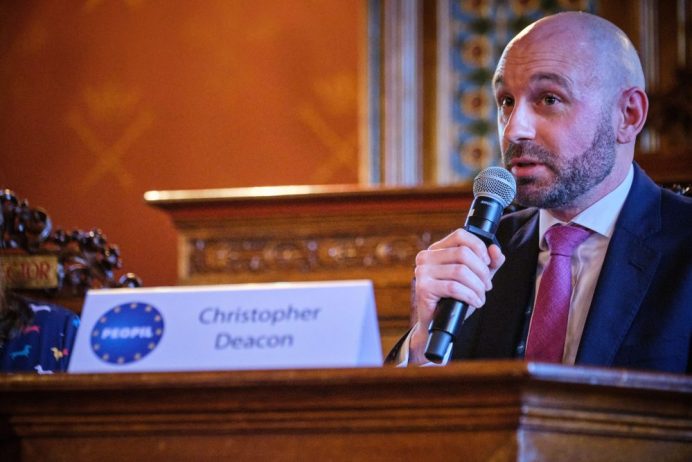
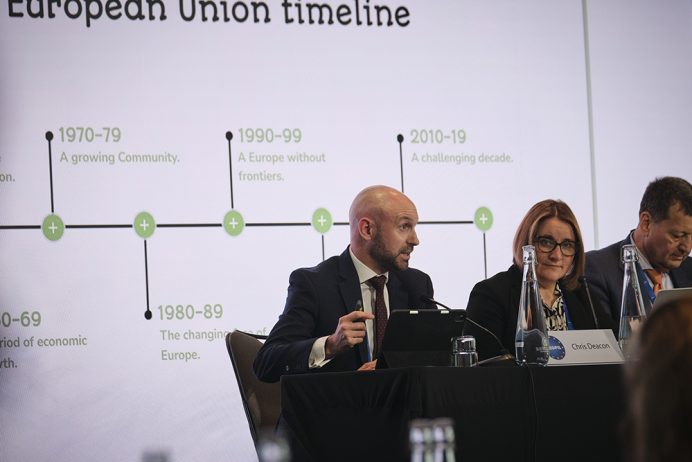
While our clients come first and foremost, part of what enables us to provide them with the best service is the time we invest in supervision, managing the firm, building relationships with colleagues and developing our business externally. Part of my role involves writing and speaking on the latest developments in our area of law. I am also engaged in lobbying for law reform and campaigning for the rights of cross-border injury victims. I chair the EU-UK Working Group of PEOPIL and am part of the Law Society’s Private International Law Working Group. It is no understatement to say that, following Brexit, there has never been a more challenging time for the work we do for international injury victims and their families. Being an active member of these organisations ensures we have a voice at the table, sharing our clients’ experience and our expertise to influence and inform change where we can.
In July 2025, I stepped down as coordinator of the APIL International Special Interest Group after 12 years of leading the formulation of education and training for other practitioners and responding to consultations on issues ranging from the Package Travel Regulations to the Consumer Credit Act. One of my proudest achievements while working with APIL was the successful introduction of its now annual international injuries conference, which has become one of the key gatherings for learning and networking for lawyers from across the UK, Europe and beyond.
My work with APIL did not stop there, and one of my latest achievements, alongside my case work, was securing the APIL Traumatic Brain Injury accreditation. Like my Accidents Abroad and Spinal Cord Injury accreditations, this kitemark is awarded following the preparation of a comprehensive portfolio demonstrating a track record and depth of understanding in these specialist areas.
1.00pm – time in the office
Stewarts has a good flexible working policy. This generally means being able to work away from the office two days a week. With our offices currently undergoing a transformation in London and Leeds, they are a fantastic and inspiring place to be. In London, for example, we have introduced stylish kitchen hubs on each floor. The change has been remarkable, fostering interactions with colleagues from other departments on a much more regular basis, when we might otherwise not have seen each other until the next big firmwide party or gathering of partners. In London, we now also have Café 63, with the name inspired by the office the firm occupied when it was founded in 1993 at 63 Lincoln’s Inn Fields.
5.00pm – wrapping up at my desk
Now, back to the last task on my agenda before finishing the day at my desk, which is finalising proceedings to secure court approval of a settlement agreed last month for a young man who sustained a severe brain injury when he was knocked down crossing the road on holiday in Cyprus. Sadly, this accident brought a university education and the prospect of a bright, high-flying career to a premature end. One of the frequent challenges in our international injury cases is working through a foreign law to maximise the outcome in damages for our clients.
6.00pm – off to a networking event
At certain times of the year, barely a week goes by without an invitation to a networking event. These often take place in the evening, but breakfast meetings are increasingly popular, in addition to lunches and dinners with existing and new contacts. These events and meetings are an important part of a lawyer’s role at Stewarts, providing an opportunity to develop deeper connections with the wide range of individuals and professionals who we might need to call upon to support the work we do and who in turn might need to call on or recommend us when someone within their network requires the trusted, specialist legal advice we can provide.
Conclusion
Since joining Stewarts in 2013, I have helped secure almost £100m in damages for our clients; however, one of the interesting aspects of my work is securing a non-financial outcome, which for some clients is a central objective. This can include safety improvements, or an apology and recognition that lessons must be learned to avoid injury or death to others in the future. This is where mediation can be a powerful tool in resolving our clients’ disputes.
My early exposure to the world of international injury showed me it is a tight-knit family and community, even among competitors and opponents. It is a wonderful global family that, for me, has grown to include trusted contacts (friends among them) in jurisdictions across the world. Never would I have thought that I would be described as the leading lawyer of my generation in this area of law. However, by keeping focused on getting the best outcomes, which, when navigating complex jurisdiction and applicable law issues is not always easy, it’s nice to know, when you take a rare moment to reflect, that those around you have quietly observed the difference you have made to your clients and the profession.