Rehabilitation after sustaining a brain injury is crucial to ensure the best possible recovery. While there are often many areas to focus on, such as occupational therapy, speech and language therapy, physiotherapy or returning to work, some people may find new interests and hobbies as a result of their neurological changes. One of those areas may be creative practices such as painting, writing or playing music that become unlocked post-injury.
Creative rehabilitation
In popular culture, there are well-known stories of people who sustained a serious head or brain injury and found that it positively impacted their life or kick-started their creativity.
Famously, Roald Dahl sustained a significant head injury as a pilot during the Second World War, which he explained unlocked new ideas and inspired his career as a prominent author. Similarly, Georges Braque and Oskar Kokoschka pursued their careers in painting after sustaining brain injuries during the First World War.
While not widely known or practised until the second half of the 20th century, artistic pursuits have long been recognised for their therapeutic benefits to those recovering from serious injury or living with mental health issues. In 1919, Dr Karl Wilmanns, of the psychiatric hospital at Heidelberg University, Germany, appointed Hans Prinzhorn as his assistant. He tasked him with documenting the collection of art produced by the hospital’s patients. By 1921, the collection contained more than 5,000 works by 450 patients.
Prinzhorn published his research, which initially did not attract scientific or medical attention but did capture the interest of the creative community. Artists became fascinated with how brain injuries and mental health conditions could lead artists to use broader, more expressive and abstract strokes.
Psychotherapists eventually followed suit, having studied the positive impacts of art therapy as a means of rehabilitation. They commented on it being a powerful tool to help people process trauma or disability, or to enable a person to express feelings and thoughts that they might be unable to articulate verbally.
Stewarts previously discussed the impact of rehabilitation through art with short filmmaker and Stoke Mandeville Research Ambassador Davey Jose on Stewarts Soundbites. You can listen to the episode here: Rehabilitation through art: ‘Living With Spinal Cord Injury’ | Stewarts Soundbites.
Submit to Love Studios
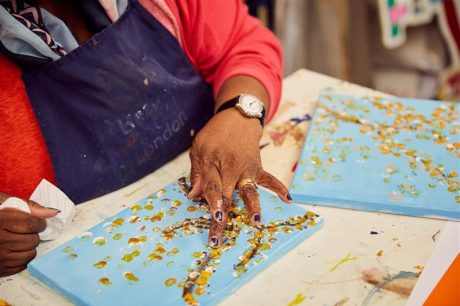
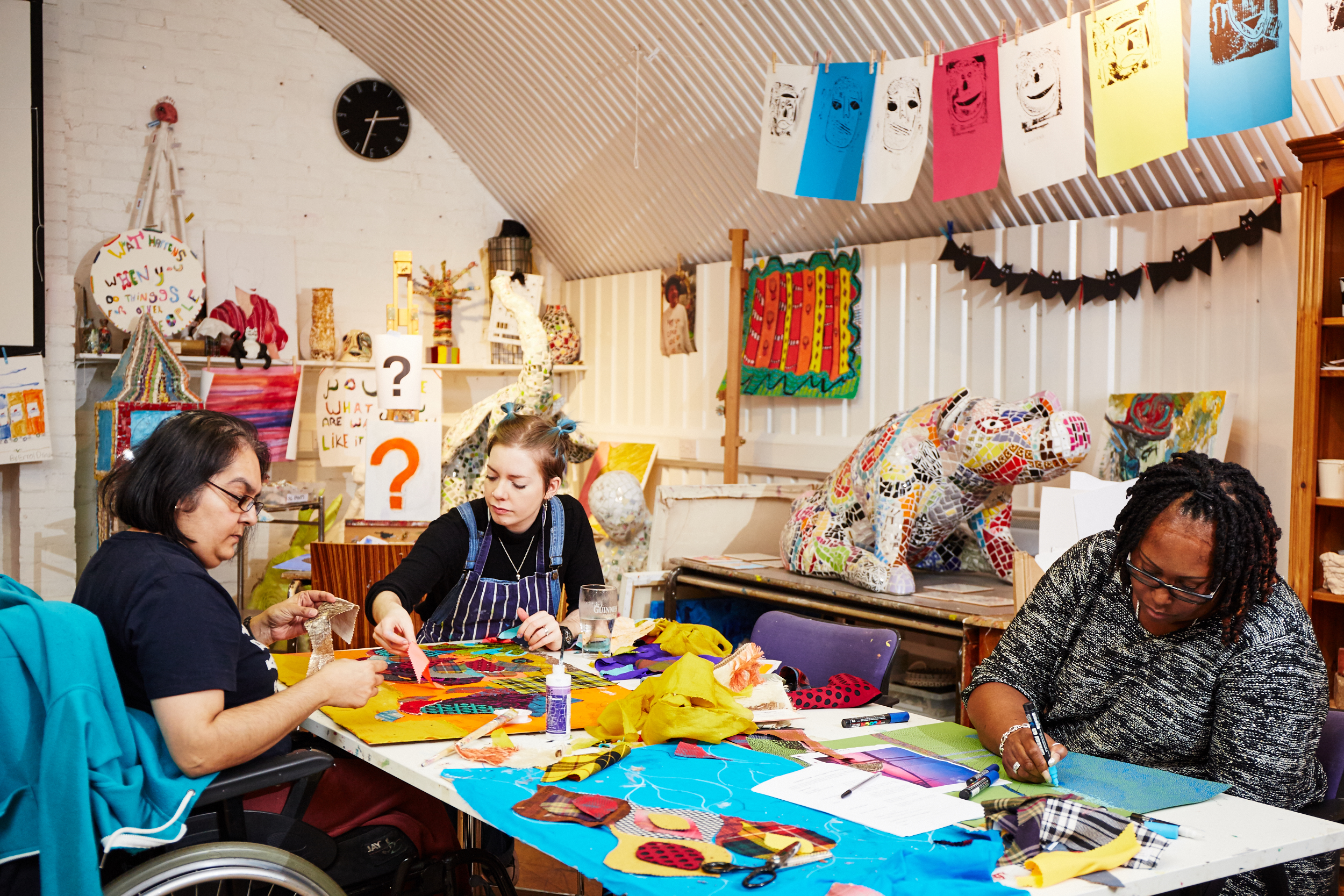
Earlier this year, Headway East London kindly allowed our Sara Palinska to visit its inspiring and welcoming space in Hackney. The specialist studio, Submit to Love, hosts engaging sessions for brain injury survivors to explore and establish their creative talents, experiment with media, engage their tactile skills and connect with a community of people who understand. While creativity has a therapeutic purpose, members of this studio are encouraged to look beyond this and develop their identity as artists.
Submit to Love provides a designated studio space stocked to the brim with professional-quality materials. Central to the project is Studio Manager Michelle Carlile, who has shaped and nurtured its growth and creative spirit for more than two decades. Michelle, an artist herself, explained that the vision for Submit to Love began with a single table at a Homerton community centre, where the charity was initially based before relocating to a new canal-side home in Haggerston and expanding to cover 13 (and soon to be 17!) boroughs across the capital. At the time, this small table was literally split in half – hosting a Monopoly game on one side, and a small section for painting or drawing on the other. Today, the Submit to Love studio is used by approximately 50 members per week.
Unlike some services with strict limits, Submit to Love offers regular studio access as part of Headway East London’s day service. People with a brain injury living in the charity’s catchment boroughs are referred to this service, and members typically attend on one or two designated days each week — creating a consistent space for creativity and connection.
Although initially exhibitions of the members’ work began in law firms and corporate offices, the exceptional standard of work produced by Submit to Love Studios has been widely recognised, leading to exhibitions and talks at some of London’s most prestigious gallery spaces, including the Barbican, Wellcome Collection, Southbank Centre, Autograph Gallery and the Royal Academy, to name a few.
Sara spoke with some members of Submit to Love Studios to gain a firsthand insight into the artists’ processes and motivations. One member, Trevor Small, explained that he still had vivid memories of horses on his farm in the Caribbean, having once ridden and trained them. He likes his work to depict horses and a cowboy in detailed embroidery, and although the colour scheme is forever changing, Trevor’s recollected vision remains bold. The physical action of punching a needle and thread onto the canvas is cathartic for Trevor.
Another artist, Jason Ferry, showed Sara his artwork, explaining that he initially wanted to depict his home because he could trace it from a photograph. He struggled to find another image to draw, later attempting faces. He repeated these images several times before Michelle encouraged him to explore more abstract prints depicting patterns he could visualise. Jason has since branched out into colourful, elaborate illustrations with a kaleidoscopic quality that feel distinctly “very Jason”.
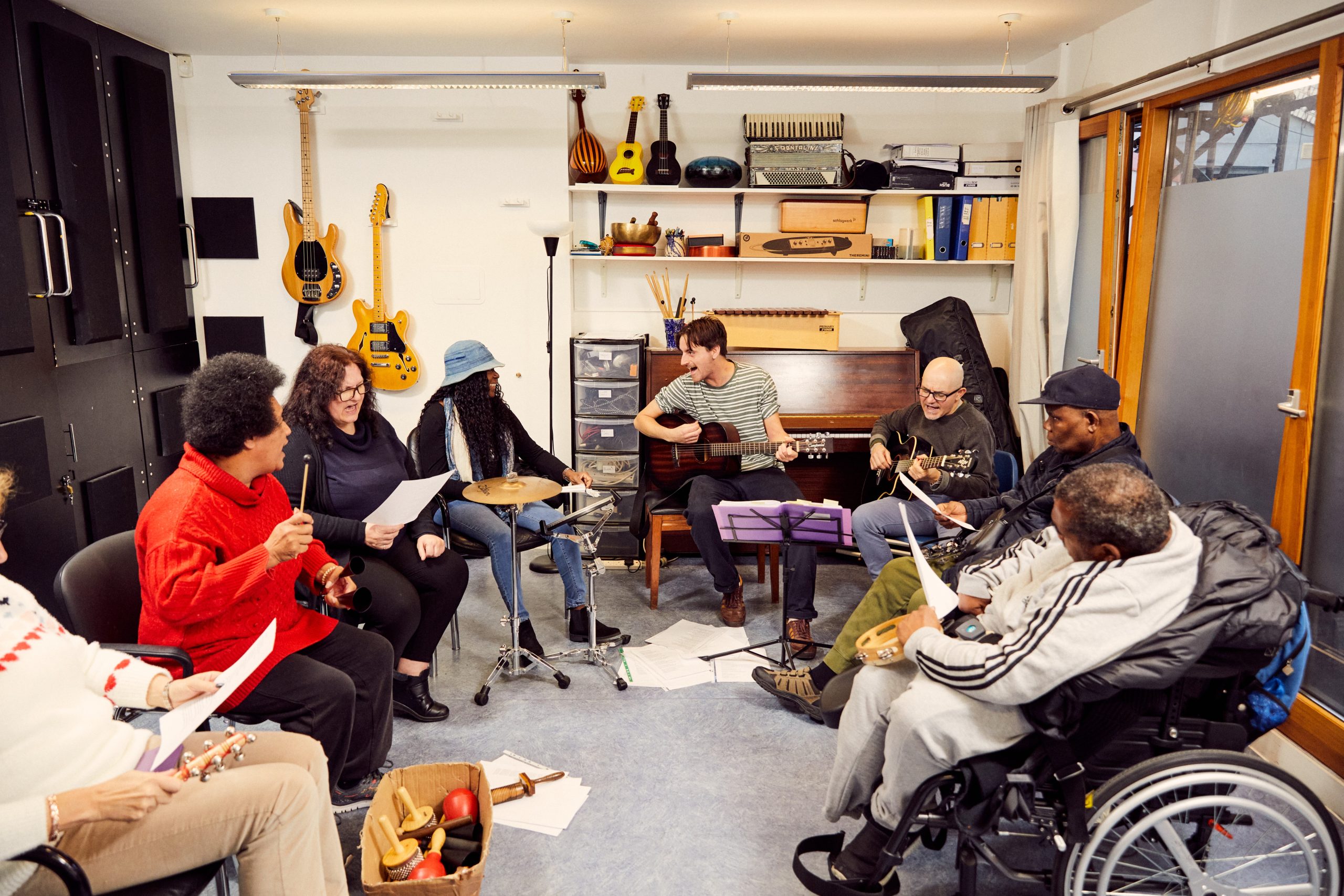
Beyond the art studio, Headway East London provides a range of creative and social opportunities through its day service, evening service, casework service, therapy service and community support service. Alongside art, members can access a music group to learn or rediscover instruments and connect through shared sessions. The member-led kitchen is also central to daily life, offering freshly prepared meals for members and staff every day. Several times a year, the kitchen hosts professional supper clubs — welcoming guests from outside the community to experience what Headway has to offer. These events are not only social and therapeutic but also help challenge perceptions of life after brain injury. Find out more and join the next supper club here: Headway EATS: Winter Feast Fundraiser 2026 | Headway East London
The positive impact of creative activity, both on the mind and sense of identity, is abundantly clear at Submit to Love Studios. While those attending the studio are no longer focused strictly on art as rehabilitation, Headway East London continues to provide dedicated therapeutic art support through its in-house art psychotherapist.
How to get involved in your area
Headway East London currently provides specialist support to brain injury survivors, their families and carers across 13 London Boroughs. Later this spring, a new service in South London will open, covering the additional catchment areas of Greenwich, Lewisham, Southwark and Lambeth.
Referrals can be made by anyone – family members, friends, GPs or other professionals. Individuals can also refer themselves.
Make a referral today: Refer | Headway East London
Support Headway East London: Make a donation | Headway East London
Follow the team on Instagram: Submit to Love Studios, Headway East London
For national opportunities, Headway UK offers art workshops at branches across the UK. If you would be interested in exploring these types of sessions, click here to find your local studio: Headway gets creative! | Headway. They also have a list of groups outside London available to browse here: Groups and branches | Headway.
You can also find other local groups and providers of art therapy on the British Association of Art Therapists (“BAAT”) website: The British Association of Art Therapists | BAAT. As well as supporting adults, the BAAT provides a range of good children’s resources and creative sessions.
APIL brain injury accreditation at the firm
Our Personal Injury and International Injury teams have significant experience in bringing brain injury claims. It is important to us to ensure the highest quality of rehabilitation during our clients’ recovery, so that they can flourish in their creative or other interests.
Stewarts is proud to have 26 solicitors accredited by the prestigious Association of Personal Injury Lawyers (APIL), with seven holding a specialist brain injury accreditation. APIL accreditation provides a quality mark of expertise for solicitors dealing with specialist types of personal injury claims. The accreditation scheme demonstrates that an APIL lawyer has achieved the high standard of knowledge, understanding, know-how, skill and behaviour necessary to navigate complex injury matters.
You can find further information regarding our expertise, experience and team on our Personal Injury page.
If you require assistance from our team, please contact us or alternatively request a call back from one of our lawyers by submitting this form.