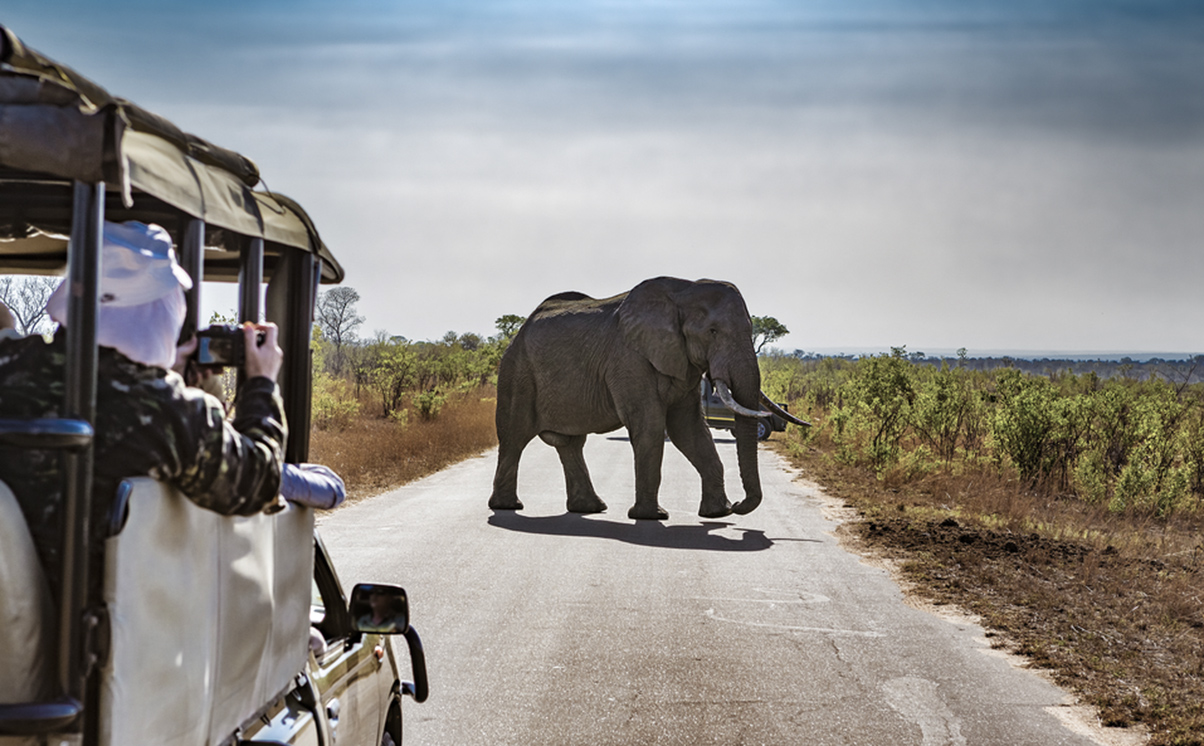
In the first article of this two-part guide to staying safe on safari, Chris Deacon, partner, and Sophia Martines, senior paralegal, from our International Injury team provide practical guidance on managing the risks associated with safari travel, covering everything from booking your holiday and preparing to travel to staying safe while on safari.
Safaris are widely considered the ultimate bucket list experience, offering a unique opportunity to see wildlife in its natural habitat. Safaris are generally safe when properly managed, but incidents can result in life-changing injuries, including head, spinal and crush injuries.
With this in mind, it is important not to forget the inherent risks when going on a holiday, tour or excursion that takes you into the wild and in close proximity to wildlife that is beautiful to admire from a safe distance but can pose a danger at close range.
The purpose of these precautions is not to discourage safari travel, but to help travellers recognise and manage the associated risks.
Booking a safari holiday, excursion or tour
- Pick a safari offered by a reputable company
- Select qualified operators. Choose a safari with licensed and experienced guides who understand animal behaviour and safety protocols.
- Carefully research the tour operator before booking to ensure that you will be paired with properly trained guides. In June 2024, a tourist was fatally attacked by a hippo during a guided ‘bush walk’ in Zambia after allegedly being taken too close to the fiercely territorial animal. The excursion had been arranged through a US-based tour operator, and subsequent legal action alleged that basic safety protocols were not followed. This incident highlights the importance of selecting operators that prioritise well-trained guides and enforce robust safety measures to minimise exposure to avoidable risks.
- Check reviews on websites such as SafariBookings.com, which have ‘Top Rated Operator’ filter options and labels. According to its website, paid placement does not influence the filters, so this should encourage consumer confidence in the information provided.
- Consider booking your safari as part of a package holiday. You will then be protected by the Package Travel Regulations in the UK and their equivalent in EU countries if something goes wrong. The tour operator is responsible for any lack of conformity in how the safari and other holiday services are provided, with its responsibility judged against local standards, regulations, customs or practice in the country where you are holidaying.
- In the UK, if you book your travel arrangements and safari tour using a credit card, provided the tour or excursion is over £100, you may be covered by section 75 of the Consumer Credit Act 1974. This provision makes the credit card provider jointly liable with the local supplier if something goes wrong.
- Spot any red flags in emails and communications early on. Watch out for poorly written emails, or requests for immediate transfers of money to personal bank accounts.
Choosing a safari guide
- Using an experienced guide is unparalleled because they can teach you essential safety behaviours such as staying downwind, avoiding sudden movements and never running away from an animal.
- While using a guide is safer, they can never guarantee your complete safety. The risks are illustrated by a fatal incident in 2025 involving Janice Easton and Alison Taylor following an elephant charging in Zambia.
- Similarly, in another fatal case in South Africa, on 18 April 2026, safari park owner and experienced guide Gary Freeman was killed by a charging elephant who was hidden in the trees. The four tourists Mr Freeman was guiding tried to put him onto a vehicle and get medical attention, but nothing could be done to save his life.
Before you travel
- Ensure you fully understand what is and is not covered by your travel insurance policy.
- Make sure to consult your GP for all necessary vaccinations, particularly anti-malaria medication, before flying. You can use this link to see which vaccinations are necessary: https://travelhealthpro.org.uk/countries.
- Always check the latest destination advice on the UK Foreign Commonwealth & Development Office (FCDO) website and follow their Travel Aware campaign for important guidance: https://travelaware.campaign.gov.uk/
Before setting out on safari
- Experts suggest wearing neutral colours while on safari, as black and blues can attract tsetse flies, which transmit African Sleeping Sickness. White or neon colours can startle animals.
- Ensure you pack essentials such as a hat, comfortable walking shoes, SPF sunscreen, and a light fleece.
- Make sure to wear walking boots while on a walking safari as there could be venomous snakes or scorpions.
- Familiarise yourself with the camp’s safety protocols, including checking whether the camp is fenced, and do not leave your tent at night without calling security to help you. In June 2025, Bernd Kebbel, a well-known businessman, was mauled by a lion when he stepped out of his tent to use the lavatory during the night.
- Many safari camps are unfenced or only partially fenced, so particular care is needed when moving between a tent and the main lodge, especially at night, early in the morning or at dusk when visibility is lower.
- Always request an escort at night, even if this is described as optional.
- Use a torch and check your surroundings before stepping out, including beneath any raised lodge or decked area.
- Do not rely on whether the area “feels safe”: wildlife presence is not always obvious.
- If you are driving yourself, ensure that you have enough fuel for your journey and that the rental vehicle has all necessary equipment, including a spare tyre, first aid kit and satellite phone.
- Consider bringing a portable power bank for your mobile phone in case you need to make an emergency call and your phone has run out of battery.
Look out for the second article. It will explore the risks travellers on safari may face and the steps to take if something goes wrong.