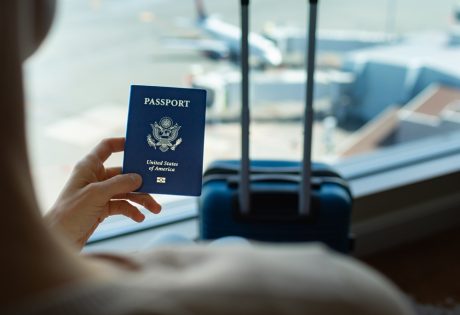
When a person sustains a serious injury in the UK, establishing jurisdiction in England and Wales (E&W) can strengthen the claim.
Citizens from the US who suffer life‑changing injuries in the UK often assume they will secure a better outcome by pursuing their claim in the US. That assumption may be reasonable—but when any party is across the Atlantic, US litigation can introduce complications.
One common scenario includes when a US citizen, while travelling as a passenger touring the UK either for work or vacation, is involved in a road traffic collision and sustains a spinal injury. In these types of cases, jurisdictional disputes, enforcement issues, and conflicts of law can all cause an increase in cost, delay, and uncertainty.
Establishing jurisdiction
When can a US citizen establish jurisdiction in E&W? The answer depends on the facts.
English common law permits a plaintiff to file suit without the court’s permission if the defendant can be served in E&W. Jurisdiction typically follows the defendant’s domicile. However, even where a defendant is domiciled outside E&W, their attorneys—or solicitors, as they’re known across the pond—may be nominated to accept service within the jurisdiction.
Under E&W Civil Procedure Rule (CPR) 6.7, the defendant or their solicitor must let the plaintiff know that the solicitor was nominated to accept service. Then, the plaintiff must serve the claim at the solicitor’s address.
It can be advantageous to file a claim in E&W because there are procedural and funding mechanisms that can make litigation more predictable and accessible for injured parties. The loser‑pays principle applies, helping protect successful plaintiffs from adverse costs. In addition, after‑the‑event insurance and no‑win, no‑fee agreements can fund litigation and manage financial risk, subject to the insurance policy’s terms and conditions.
Motor vehicle crash claims in E&W also provide meaningful protections. If an insurance policy covers a vehicle registered in the UK, bodily injury coverage is generally unlimited. Where a vehicle is uninsured or the driver can’t be traced, the Motor Insurers’ Bureau (MIB) provides guaranteed funds to meet valid claims that satisfy the requirements of the MIB agreements. Therefore, the innocent victim of a road traffic collision in E&W should always have a viable route to recover damages, subject to any issues of contributory negligence or defences such as illegality.
Forum non conveniens
Even when the jurisdictional gateways are satisfied, a US plaintiff may still face a challenge to jurisdiction.
The central question becomes whether E&W is the proper place for the case to be heard. English courts have developed a substantial body of case law on this issue, reflecting the fact‑specific nature of the inquiry.
Relevant considerations may include the location of witnesses, the language used in key documents, and whether liability is genuinely in dispute. In some cases, defendants may choose not to contest jurisdiction in E&W if the alternative is defending proceedings in the United States, where litigation costs and exposure may be significantly higher.
E&W will ordinarily be the appropriate forum where, for example, a plaintiff is injured by a local defendant‑driver in a motor vehicle crash, or sustains an injury while on a package holiday involving a UK tour operator and accommodations in London, or where English law applies.
When a plaintiff has more than one option for jurisdiction, it is important to consider which offers the best path to recovery, taking into account any limitation periods under the applicable law to ensure that the plaintiff’s position is fully protected.
If a US citizen pursuing their claim in E&W wishes to bring in a defendant not domiciled in E&W, they must receive the court’s permission through one or more gateways, including:
- Joining the overseas defendant to proceedings against an “anchor” defendant domiciled in England and Wales
- Bringing a claim based on a contract governed by English law or formed in E&W
- Pursuing a tort where damage was or will be sustained within the jurisdiction.
The UK Supreme Court has established that “damage” includes the initial injury‑causing event as well as ongoing pain, suffering, and financial losses sustained within the jurisdiction. The plaintiff must serve the claim form outside E&W using an approved international service method, typically under the Hague Service Convention.
Defendants from the United States
In a recent case, a plaintiff accompanied her husband (both residents of South Carolina) on a business trip to England, where they were involved in a collision and she sustained injuries. The plaintiff would need to name her husband as a defendant in the proceedings, but in reality was pursuing a claim against the UK‑based insurers.
When the insurers were unresponsive, plaintiff attorneys collaborated with UK counsel on a settlement strategy. The approach aimed to maximise the plaintiff’s recovery while preserving her ability to file suit in the US and England if pre‑trial settlement failed.
The E&W motor claims system can offer plaintiffs greater certainty through early liability admissions and access to interim funding. This case was unique, however, due to the interplay between rules on jurisdiction and private international law principles. These rules required the application of South Carolina law because both the plaintiff and her husband were domiciled there.
Where a US defendant must be served in E&W proceedings, it is mandatory for service to comply with the Hague Service Convention, which introduces additional procedural requirements and potential delay. These delays may stem from completing and filing the formal request for service and accompanying documents with the Foreign Process Section at the Royal Courts of Justice. The process can involve a Senior Master—the judge in E&W assigned to oversee Hague Convention requirements—among others. Service may, however, also be effected through informal delivery, such as by post.
When representing US citizens injured in England and Wales, it is critical to assess whether E&W offers procedural or strategic advantages. These may include the Pre‑Action Conduct Rules enshrined in the Pre‑Action Protocol of the E&W CPR, references to the Rehabilitation Code, and features of English law generally.
Establishing a strong jurisdictional foundation in an international injury claim can streamline proceedings, manage costs, and ultimately help secure meaningful redress for injured clients.
This article was first published in American Association for Justice Trial magazine.
How can we help with your claim?
Stewarts’ International Injury specialists have extensive experience supporting clients who have been injured abroad. If you would like to understand your prospects of making a successful claim, get in touch with us today to speak with our expert team.