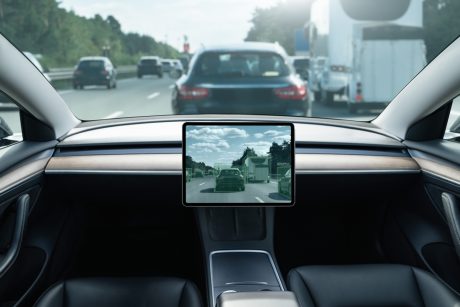
By the end of 2026, it is anticipated that Londoners may be able to hail and travel in a self‑driving Waymo taxi. For public uptake of automated vehicles (AVs) to be successful, safety must sit at the heart of their introduction.
Waymo continues to face scrutiny in the United States. Recent incidents include a vehicle blocking emergency medical services near the scene of a mass shooting in Texas, as well as investigations by the National Transportation Safety Board (NTSB) into vehicles illegally passing stationary school buses. A BBC documentary also raises safety concerns from the deployment of so‑called “autonomous” vehicles in the US.
Against this backdrop, the UK Government has recently closed its Call for Evidence on the development of the automated vehicles regulatory framework. Responses will inform secondary legislation, guidance and wider policy development underpinning the Automated Vehicles Act 2024. While AVs are expected to improve road safety by delivering a level of safety at least equivalent to a careful and competent human driver, achieving this ambition will depend on robust regulation, transparency and accountability.
In the Stewarts response to the Call for Evidence, we focused on the measures required to ensure safety, accountability and public confidence in the deployment of AVs.
Some of the key considerations drawn out are:
Remote assistants
Remote assistants should receive appropriate training, possess the necessary knowledge and be medically and cognitively fit to monitor self‑driving vehicles. Those undertaking this work must have appropriate working conditions, including regular breaks, and comprehensive training on when and how they may be required to intervene or take control of the driving task, as well as clarity around liability. Stewarts drew comparisons with the requirements placed on air traffic control officers, who must obtain medical certification to perform their role safely. There are also security risks inherent in enabling individuals to oversee fleets of vehicles, making robust background checks essential.
Statutory inspectors
Independent statutory inspectors will investigate AV incidents, mirroring existing UK bodies responsible for air, rail and marine accident investigations. Their role is to examine safety issues and make recommendations to improve standards, rather than to assign blame. This represents a significant shift away from the traditional focus on individual driver fault.
Stewarts has emphasised that investigations must be transparent and accessible if public confidence is to be maintained. We have proposed a public “docket” system, similar to that used by the NTSB, enabling relevant documents to be uploaded and accessed so that injured individuals and bereaved families can monitor the progress of investigations.
Transition demand
We have raised concerns about the current 10‑second window between an AV issuing a transition demand and a human being required to take control of the driving task in various possible scenarios. In addition, it is essential that transition demands are communicated using a combination of visual, auditory and haptic signals, to ensure that people with protected characteristics are not excluded from using AVs.
Accessibility
AVs, including automated passenger services, present significant opportunities to improve mobility for seriously injured and disabled people, supporting access to employment and participation in the community. While the Department for Transport intends to establish an Automated Passenger Services Accessibility Advisory Panel, it is vital that people with lived experience of disability are meaningfully involved in setting minimum accessibility standards for both public and private AVs from the outset.
AVs will only succeed if safety, accountability and accessibility are embedded from the outset. Experience from overseas shows how quickly public trust can be lost when oversight is weak or responsibility unclear. The UK now has a rare opportunity to set a global standard — but that will depend on robust regulation, transparent investigation and inclusive design that puts road users first.