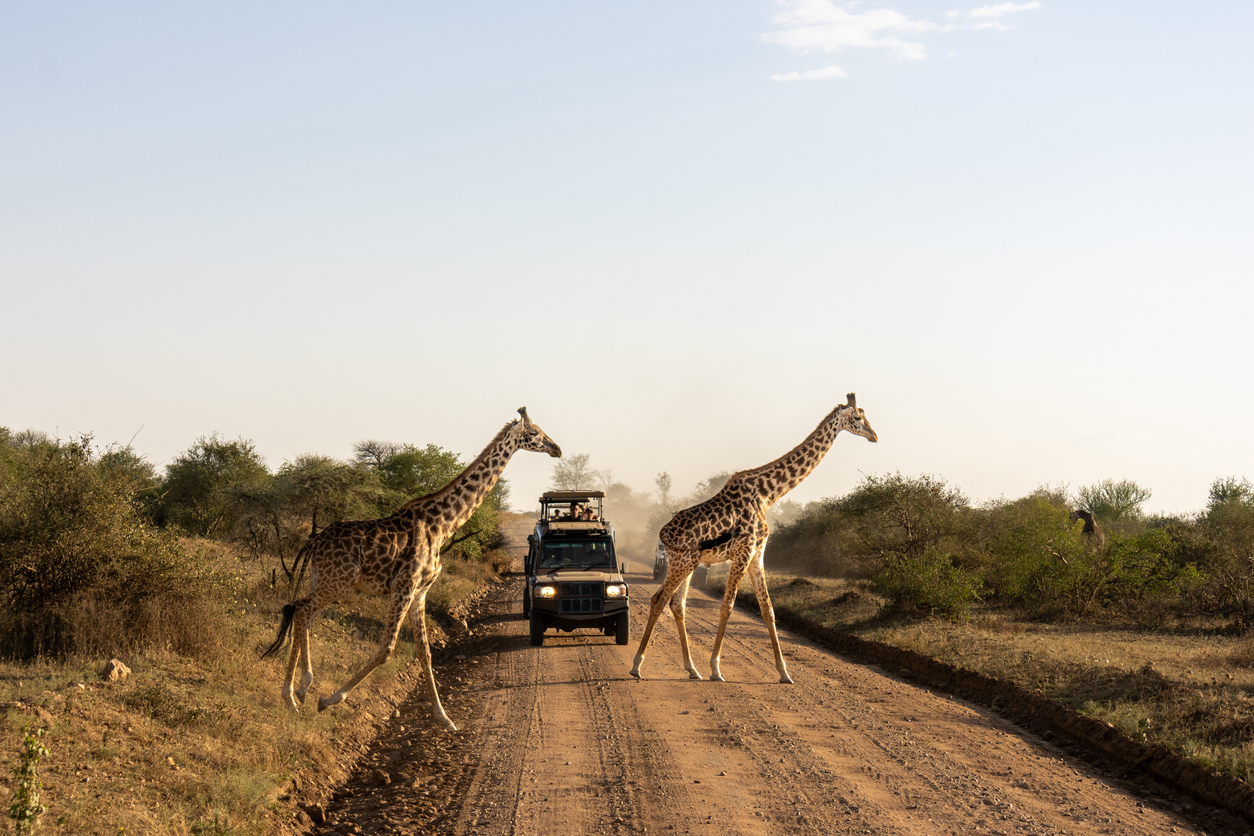
In the second article of this two-part guide to staying safe on safari, Chris Deacon, partner, and Sophia Martines, senior paralegal, in our International Injury team highlight the risks travellers on safari may face and the steps to take if something goes wrong.
Most safaris are conducted safely, and serious incidents are rare, but the consequences can be severe if basic precautions are ignored. Travellers should approach the experience as informed and responsible participants: operators, guides and guests all have a role to play in reducing avoidable risk. By listening carefully, respecting boundaries and treating the environment with caution, travellers can enjoy the adventure while taking sensible steps to protect themselves and those around them.
The purpose of this article is not to discourage safari travel, but to help travellers recognise and manage the associated risks.
Risks on safari typically fall into three categories:
(1) Wildlife interaction risks
These include charges, territorial behaviour and sudden reactions when animals are approached too closely or feel cornered.
- Do not approach the animals.
- Never approach wild animals, even if they appear calm.
- Maintain a respectful distance to reduce the risk of triggering aggressive behaviour.
- Do not feed or attract animals by mimicking noises.
- If you are on a walking tour, stay quiet and do not stray from the group. Walking tours are a higher-risk environment than vehicle safaris, with the biggest risk being unpredictable encounters at close range.
- Do not assume a walking safari is simply a slower-paced game drive. The absence of a vehicle changes the risk profile, and staying aware is essential because encounters can happen at close range.
- Walk in single file and maintain spacing exactly as directed by the guides.
- Do not overtake the guide or ranger.
- Never run, even if you are startled or scared.
- Horseback safari risks
- Horseback safaris are a more advanced activity and are not generally suitable for inexperienced riders or those unfamiliar with open, unpredictable environments.
- Horses are prey animals and can react suddenly to wildlife, however well-schooled they are.
- Compared to a vehicle, riders have less ability to control the situation if an animal moves unexpectedly or the horse startles.
- The risk of being thrown or unseated should be taken seriously because falls can result in a head or spinal injury.
- Only participate if you meet the safari provider’s experience criteria and are comfortable riding in an open, uncontrolled environment.
- Maintain formation and spacing, do not ride ahead of the guide, and avoid sudden movements or loud noises.
- Follow the guide’s instructions immediately during wildlife encounters, recognising that those instructions may differ from a traditional riding setting.
(2) Environmental risks
Environmental risks include difficult terrain, water-based activities, limited visibility and the remoteness of some safari areas, where access to urgent medical care may be delayed.
- Water-based activities
- If you are near water, do not dangle your hands or feet in the water. It is recommended to keep a safe distance from the water’s edge where crocodiles and hippos can be submerged. Hippos are incredibly dangerous and should not be underestimated, as they statistically claim more lives than lions.
- There are also kayaking safaris and sundowner cruises, where there may be limited visibility beneath the water surface.
- Maintain safe distances, do not approach pods of hippos, and avoid narrow channels or areas with restricted escape routes.
- Stay alert and controlled by avoiding splashing, sudden movement or loud noise; paddle steadily and follow the guide’s positioning.
- Wear any safety equipment provided and secure your belongings so that they do not affect your balance.
- Remoteness
- Some safari locations are far from medical facilities, so minor errors in judgement can have serious consequences if emergency assistance is delayed.
(3) Vehicle-related risks
- The risks are not only the wildlife, but also falls, sudden braking and uneven terrain while in a vehicle. Most safari vehicles are often open-sided with elevated seating and may not have seat belts.
- Guests should familiarise themselves with the vehicle set-up before departure, including where to sit, what to hold and when movement in the vehicle is permitted.
- Keep both feet planted and your body inside the vehicle at all times, even when the vehicle has stopped.
- Avoid standing or half-standing for photos unless the guide explicitly permits this; even if the guide does, this is best avoided while the vehicle is moving.
- Keep cameras and bags secured so they do not pull you off balance or accidentally get hooked on something outside the vehicle.
- Be particularly cautious when the vehicle is turning sharply, crossing uneven ground or repositioning quickly around animals.
- Children and vulnerable travellers require particular consideration. Ensure children remain seated at all times and consider carefully whether the vehicle configuration is appropriate for elderly, neurodiverse or mobility-impaired travellers, including whether they could safely and quickly remove themselves from the vehicle if required.
What to do if something goes wrong
- Stay in your vehicle unless instructed otherwise.
- Always follow the guide’s instructions.
- Safaris are guide-, ranger- and tracker-led, but guest responsibility still matters. Guides are trained, but visibility may be limited by bush density or terrain, and animal behaviour can change quickly.
- Refrain from taking selfies or photos that require you to move close to animals or dangerous areas.
- Prioritise safety over social media content. If a guide tells you to move, do not linger for that Instagram photo moment.
- Stay alert even when the vehicle is stationary; do not assume it is safe simply because the engine is off.
- Listen for the guide’s tone as much as the instructions given, as urgency matters.
- Avoid distractions such as phones or headphones so you can respond quickly to instructions and changes in the guide’s tone.
- Make sure to stay hydrated throughout your safari and only drink water that is bottled and supplied for you.
Read the first article of this two-part guide here.