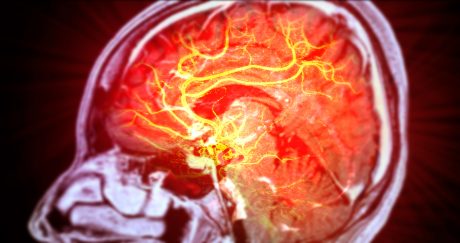
As part of Stroke Awareness Month, we spoke to consultant stroke physician Professor Ganesh Subramanian and professor of neurology Professor Pankaj Sharma OBE about the symptoms of stroke and what steps to take if you suspect that you or someone close to you is showing signs of having stroke.
What is stroke?
Professor Sharma OBE
Stroke occurs when the blood supply to part of the brain is suddenly cut off. This can happen because of a blockage (ischaemic stroke) or bleeding in the brain (haemorrhagic stroke). If a blood vessel carrying oxygen and nutrients to the brain is blocked or bursts, brain cells can be damaged or die, leading to physical and cognitive impairments, depending on the part of the brain affected. Stroke can happen to anyone at any age. It is a medical emergency requiring immediate attention.
Professor Subramanian
Stroke is often seen as an old person’s disease, but it can affect people of any age group, including children. Stroke is usually due to a disruption to the blood supply to the brain. The most common reason for stroke is a blockage to a blood vessel that stops the blood flowing to the brain. However, in about 15% of cases, it is because the blood vessel pops, which leads to bleeding inside the brain.
What are the common and uncommon signs/symptoms of stroke?
Professor Subramanian
The Stroke Association has been publicising what is called ‘FAST’, which is face, arm, speech and time to call. If someone has a droopy face, if they have problems with their speech (which can either be difficulty speaking or having slurred speech) or weakness of the limbs, this may be a sign of stroke. T is for time to act quickly. FAST is quite good at identifying stroke, and a lot of patients who have stroke will have one of those signs. But, of course, this doesn’t pick up everything because the stroke symptoms will depend on which part of the brain is affected. For example, if the back of the brain, such as the cerebellum, is affected, there will be a problem with balance. Similarly, if the occipital lobe at the back of the brain is affected, vision problems tend to occur. What I recommend is to consider thinking about stroke if anyone develops any new neurological problem of sudden onset. It’s easier to think it could be stroke and for us to look at them in the hospital and then rule out stroke rather than missing something, because earlier treatment has potentially significant benefits.
When should I call an ambulance or go to hospital if I have signs or symptoms of stroke?
Professor Subramanian
Immediately. This is really important, as there are very effective, time-critical treatments. If you think you’ve had stroke or somebody else has had stroke, and you are looking at them as a bystander, ring 999 instantly. Do not wait to contact your GP the next day. Contact 999 immediately, as this is a medical emergency.
Professor Sharma OBE
Stroke is a medical emergency. It is very important to contact 999 immediately and be examined in hospital as quickly as possible.
How common is stroke in the UK?
Professor Sharma OBE
Stroke prevalence continues to rise. The NHS Long Term Plan 2019 identified stroke as a clinical priority. Worldwide, stroke is the second largest cause of death. Although around one-third of patients with stroke will unfortunately die, by 2035, 187,000 people annually are expected to be stroke survivors. Currently, approximately 1.3 million stroke survivors are in the UK.
Professor Subramanian
Stroke is increasing. At the moment, it’s estimated there are about 150,000 stroke a year, of which about 30,000 or so are recurrent stroke, so roughly about 120,000 new stroke. The Stroke Association estimates that, over the next 10 years, this figure is expected to treble or even quadruple. This is due to the ageing population and other factors. The government is spending about £15bn on NHS and social care on stroke, and that is supposed to increase to an eye-watering £65bn in 2035, which is nearly half of today’s NHS and social care budget.
The ageing population is one of the major reasons for this increase, but, of course, anything which increases the chance of you having your blood vessels damaged increases the risk of stroke. A tsunami we are seeing right now is obesity, or metabolic syndrome, as we call it. If you are obese, you are more likely to develop high blood pressure and more likely to be insulin resistant. Those two things significantly increase the risk of having your blood vessels damaged over time, thereby increasing the likelihood of stroke. Common things which increase the risk of stroke are high blood pressure, diabetes, smoking, obesity and excess alcohol.
Another thing, which obviously tends to be more common as we get older, is when you have an irregular heart rate, called atrial fibrillation. Anytime we see a patient, we check the pulse as an opportunistic way to look for an irregular heart rate. There are people now who wear smart watches like Apple and Samsung watches, which are in some ways equivalent to a one-lead ECG in that they can alert people to irregular heart rate. Not everyone can afford one of these, but if you have one, that’s a helpful aid. If you have an irregular heart rate, go and see your doctor and get it checked out. A smartwatch can’t diagnose atrial fibrillation, but it can detect an irregular heart rate, which can be a sign of atrial fibrillation. The big risk factors, apart from ageing, are high blood pressure and irregular heart rate, and they increase the risk of stroke by about five times compared to someone with normal blood pressure and heart rate. If you see an irregular heart rate, go and see a GP for a proper 12-lead ECG.
As we get older, we need to think about measuring our blood pressure. It’s a very simple thing. Blood pressure machines are very good. They cost about £10 from your local pharmacy, and your blood pressure is easy to monitor. Atrial fibrillation and hypertension are silent killers; many people don’t know they have them until they end up with stroke. It is well worth checking your blood pressure on a regular basis yourself.
What causes stroke?
Professor Subramanian
It depends on the individual circumstances. There are times when some of the big blood vessels in the neck narrow, which can cause a clot. Sometimes, it is related to the small blood vessels being damaged because of smoking, high blood pressure and ageing, etc. The other major issue when you have atrial fibrillation is that you develop clots in the heart itself, and clots then travel to the brain, causing stroke. These tend to be much bigger clots, which lead to very severe stroke. These cause clot-related damage (ischaemic stroke). Another 15% or so of patients suffer from bleeding in the brain (a common reason being high blood pressure, ageing changes in the blood vessels, etc.).
Professor Sharma OBE
There are numerous risk factors for stroke, and the risk of stroke increases with age. Common causes can be put into categories known as non-modifiable and modifiable. The former being age, race/ethnicity and genetics. The latter being high blood pressure (hypertension), atrial fibrillation, obesity, diabetes and smoking. Stroke is nearly always of abrupt onset, and there can be many causes, such as thrombus, embolus and rupture of an aneurysm.
What is the difference between a transient ischaemic attack (TIA) and stroke?
Professor Subramanian
A TIA is like a warning. You have a transient blockage of the smaller blood vessels, which produces neurological symptoms. In most instances, it recovers within 20 minutes or so, and rarely lasts more than an hour. And the good thing is, a TIA doesn’t leave any permanent brain damage. If one has a TIA, they really need to be seen in a specialist clinic within 24 hours. They need to have the necessary scans, an ECG and be started on the appropriate medication. Ideally, a GP would start a patient on regular aspirin until they’re seen in the TIA clinic, which should happen within 24 hours. It is a warning sign saying that you need to be looked at, and we need to act on it and prevent the stroke from happening.
Stroke, on the other hand, leads to permanent brain damage. It doesn’t necessarily mean they will have permanent neurological symptoms, but when you do a brain scan, you will see evidence of damage. In a TIA, you do not see that.
Professor Sharma OBE
A TIA requires a person to make a full recovery within 24 hours. Otherwise, it is described as stroke. The majority of people with TIA have full resolution of symptoms within one hour. Symptoms of TIA are similar to those of stroke, and a rapid clinical assessment is needed.
Can stroke be prevented?
Professor Subramanian
Yes and no. Yes, in the sense that we can reduce the risk of that by improving our lifestyle. Regular exercise reduces the risk of stroke by about 25% (more than most medications aimed at reducing the risk of stroke caused by lifestyle factors). In fact, the byproduct of regular exercise is that your chance of becoming obese decreases (because you are being active), your blood pressure improves and your insulin resistance reduces. Managing any of the risk factors, especially vascular risk factors, will reduce the risk of stroke. Of course, it does not nullify it, but it does reduce the risk significantly.
Professor Sharma OBE
Reducing the modifiable risk factors can reduce the risk of stroke. Medications can reduce the risk of stroke. Antiplatelets and anticoagulants can be prescribed. Lifestyle improvements and medication, where appropriate, can help reduce the risk of stroke but will depend on each person’s unique characteristics.
What should happen when you have stroke?
Professor Sharma OBE
Getting to hospital urgently is a priority. Time is brain. Nearly two million brain neurons die every minute following an untreated stroke, so every minute counts. In hospital, you will be clinically assessed and usually undergo investigations such as a CT scan of the head. If treatment is appropriate, it will be considered and administered.
Professor Subramanian
You need to ring 999 immediately so that you can be provided with time-critical treatments, if appropriate. Stroke can happen in a split second, and the consequences can be devastating, not just for the patient but also for the people around them. Time-critical treatment is appropriate for only about 10% or so of stroke. In the remaining 90% of cases, the importance is on rehabilitation and trying to get patients as well as we can (to improve and maximise what they can do). It can be a lengthy process. Sometimes, you will need to stay in hospital. Sometimes, rehabilitation is better done at home. We aim to provide intensive rehabilitation in hospital when required, but it’s really important to focus on rehabilitation at home or where you are going to be living rather than in hospital.
What are the time-critical treatments for stroke?
Professor Subramanian
There are very important and effective time-critical treatments, particularly if the blood vessels are blocked. There are clot-busting treatments we can give, and we can mechanically fish a clot out of the brain, depending on the individual circumstances. We use these treatments if the brain is not too damaged so that the treatment is effective. If treatment is appropriate, they are time-critical; the sooner we remove or disperse the clot, the better the outcome. In terms of a bleed in the brain, controlling the blood pressure quickly does have benefits in terms of outcome.
Professor Sharma OBE
Stroke is time critical. To be potentially eligible for thrombolysis treatment, a patient must receive this treatment within 4.5 hours of the onset of symptoms.
What are the short-term and long-term effects of stroke?
Professor Subramanian
The effects depend on which part of the brain is involved. It also depends on whether the stroke happened in the right or the left side of the brain. Generally speaking, you tend to have problems with weakness of the arms and legs, and problems with speech, balance, vision and memory. One of the major problems we see is problems with swallowing, which can be assessed in hospital and is another reason why patients need to be in hospital as soon as possible. We call these the early problems. There are later problems. These can include having seizures due to brain damage. I see the brain as a transformer on a national grid, and the more damage you have, the less electricity is going to pass normally, so you are more likely to have seizures. The other longer-term complication we commonly see is mood problems. People can become depressed and anxious. They can become agoraphobic. They can become emotionally labile, so they cry or laugh inappropriately. These effects tend to be long-term and start to emerge around three to six months post-stroke.
If you are immobile, then the risk of developing infection is increased, which often tends to be the terminal event in somebody who has had a severe stroke. If patients are not positioned appropriately, they are also at risk of pressure sores and are more likely to develop water infections. Brain damage due to stroke can cause people to be incontinent of both bowel and bladder. Unfortunately, the problems are numerous.
Professor Sharma OBE
Stroke can have life-changing consequences, such as difficulties with strength, communication, speech, swallowing, feeding, continence, epilepsy and mobility. It can also reduce life expectancy.
What can you do to prevent another stroke?
Professor Subramanian
The best thing is to try and prevent stroke from happening, but if someone has had stroke, then the first thing to do is look at the scan to determine whether they have a clot and after considering time-critical treatment(s), to look at the likely cause.
Thinning the blood with medication such as aspirin (or clopidogrel) helps to reduce the risk of stroke. Also, if a patient has an irregular heart rate, we will start thinning the blood with one of the stronger blood-thinning agents, such as warfarin or a newer agent.
If the stroke is related to a bleed, I think one of the most important things is controlling the blood pressure because that’s one of the biggest risk factors. There is something called amyloid angiopathy. As we get older, we get deposition of amyloid in the blood vessels in the brain. Unfortunately, there is not a lot we can do, but even in those cases, controlling blood pressure is really helpful.
Find out more about Stroke Awareness Month here.
Find out more
If you or a loved one has been affected by stroke-related medical negligence, our specialist team is here to support you. Contact us and our expert medical negligence solicitors will review your circumstances and determine whether you have grounds to pursue a claim.