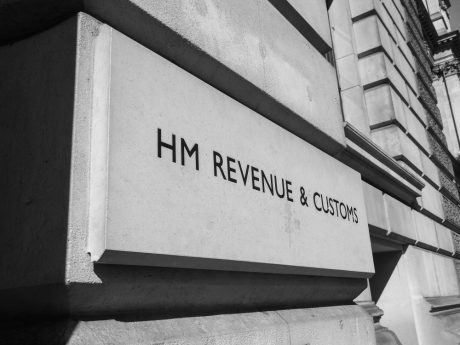
In this article, partner Matthew Greene and associate barrister Guy Bud consider the recent case of L Rowlands & Co (Retail) Ltd v HMRC [2026] UKUT 130 (TCC). The case raises important questions about the role of tax tribunals in adversarial litigation, especially with regard to the tricky issues of evidence and a taxpayer’s freedom to make its own strategic choices in litigation.
Background
Rowlands arises from a long-running dispute about the employment status of more than 1,000 locum pharmacists who contracted with the taxpayer company. Employment status disputes require careful consideration of the facts of the individuals’ contractual and real-life working arrangements.
As part of its investigation, HMRC attempted to contact some of the locum pharmacists during the enquiry stage, but the taxpayer company vigorously opposed this and threatened to initiate judicial review proceedings. HMRC backed down. The taxpayer instead adduced evidence from only two locum pharmacists, which HMRC felt was insufficient to reach a conclusion on the facts of the case.
Rather than fully setting out its case on all aspects of the employment test, HMRC instead noted in its statement of case that the lack of evidence available meant that “HMRC cannot presently plead a detailed case”. HMRC “reserve[d] the right to seek permission to amend the [statement of case]” once it had seen the taxpayer’s evidence.
The dispute
The dispute about procedure came to a head at a case management hearing in the First-Tier Tribunal (FTT) in May 2024. HMRC applied for directions to address the lack of evidence about the locums’ factual positions by requiring the adoption of a “sample case approach” in which the taxpayer would be required to provide evidence from 10 additional locums. The taxpayer, for its part, sought an order requiring HMRC to provide fuller and better particulars in its statement of case on why it considered the employment test to be made out.
The FTT sought to reconcile both applications and issued directions pursuant to which:
- the parties were required to identify 10 further locums as witnesses
- the taxpayer, if it wished to do so, was allowed to prepare witness statements and call the locums selected as its witnesses
- if the taxpayer did not wish to do this, however, the FTT would issue witness summonses requiring the locums to appear and be subject to examination-in-chief by the FTT
- HMRC was ordered to provide further and better particulars once it had been able to consider the new evidence from the locums.
The taxpayer sought permission to appeal to the Upper Tribunal (UT). The FTT initially rejected the application, but it was accepted by the UT.
The UT appeal
The taxpayer’s appeal in the UT was based on two main grounds:
- the FTT had no power to issue directions requiring a party to call a witness it does not want to call (the Jurisdiction Ground)
- the FTT’s proposed course of action was contrary to the fair and just disposal of the proceedings in line with the overriding objective (the Discretion Ground).
The UT firmly rejected the taxpayer’s appeal on the Jurisdiction Ground. But it then pivoted and came down firmly on the taxpayer’s side on the Discretion Ground. Why?
The Jurisdiction Ground
The taxpayer argued that the FTT had no legal basis to require a party to call evidence from a particular witness. This was, in the taxpayer’s view, essentially what the FTT had tried through approving HMRC’s sample case approach, which was tantamount to forcing the taxpayer to call witnesses it did not want to call. It ran directly contrary to the principle that the tribunal system was adversarial rather than inquisitorial in nature.
The UT found this argument misconceived. It found that the FTT had not, in fact, sought to force the taxpayer to call witness evidence in its own right. It said:
- The FTT was entitled to direct the parties to provide the names of potential locum witnesses pursuant to Rule 5(3)(d) of the First-Tier Tribunal Rules (the FTT Rules), which allowed the FTT to “require a party or another person to provide documents, information, or submissions”. It did not allow the FTT to force a party to call a witness to give oral evidence that that party did not want to call, but this was not what the FTT had sought to do.
- The FTT instead had threatened to use its summons power under Rule 16 of the FTT Rules to require the locums to be examined-in-chief by the FTT as its own witnesses and not as those of either party.
The UT emphasised that the FTT is a “creature of statute” and that its powers must be assessed by reference to the Tribunals, Courts and Enforcement Act 2007 rather than “more nebulous debate as to whether the nature of proceedings in the FTT is ‘adversarial’ or ‘inquisitorial’”. There were, in fact, times when the UT speculated that the FTT should adopt an inquisitorial approach in dealing with unrepresented litigants, for example, and this was precisely the kind of flexibility that the FTT’s procedure had been intended to allow.
The Discretion Ground
Despite finding that the FTT had not exceeded its legal jurisdiction, the UT found that the FTT had erred by exercising its discretion to make the case management decisions. It was clear that the parties disagreed about the sufficiency of the evidence, and the FTT had sought to assist through taking steps to achieve “what it hoped would be a fair and representative sample of evidence to decide the appeal”.
The UT found that the FTT’s actions had infringed the principle of “party autonomy”. All litigants are entitled to make their own tactical and strategic choices about what evidence they wish to present, with all the consequences that might follow. HMRC had decided not to follow through on its intention to collect evidence from more locums during the original investigation. The FTT’s actions allowed HMRC the possibility of cross-examining the locums, which, under the principle of non-impeachment, they would not have been able to do had they called them as their own witnesses.
The FTT had therefore gone “beyond being the neutral arbiter in adversarial proceedings”. Its power to call its own witnesses should be exercised “very sparingly” and certainly not to fill gaps in the evidence, which the parties had, effectively, chosen not to fill. The gaps could be used to benefit either side’s case.
Finally, the UT found that the FTT had erred by allowing HMRC to consider the witness evidence before providing further and better particulars. This “inverted” the normal procedural safeguards in the FTT Rules that allowed the taxpayer to see HMRC’s case before considering how to respond with its own evidence. HMRC must logically have concluded that the locums were employees (because they had raised a tax assessment on that basis) and should simply explain why this was. Accordingly, the UT remade the FTT’s directions to require HMRC to provide further and better particulars immediately.
Conclusion
Rowlands is a reminder of the difficulties that witness evidence can sometimes create, although the situation in this case was unusual. It is also an important restatement of the principles of party autonomy as they apply to tax cases. Taxpayers will particularly welcome the reaffirmation of the importance of procedural safeguards. Inevitably, nuanced tactical choices about how to present evidence most effectively will always be at the heart of most tax disputes, whatever the issues involved.
Find out more
You can find further information regarding our expertise, experience and team on our Tax Disputes page.
If you require assistance from our team, please contact us.