April marks Limb Loss and Limb Difference Awareness Month (LLLDAM). This year’s theme, ‘Empowerment, Community and Storytelling’, highlights the importance of raising awareness, sharing lived experiences and ensuring people have the tools they need to live independently.
In this article, Huseyin Kahyalar, an associate in Stewarts’ Personal Injury team, explains why access to a range of prosthetics is essential for independence and quality of life. Drawing on a recent client case study, he outlines the types of prosthetics and their uses, why one device is rarely enough and how activity‑specific prosthetics can support independence, help remove barriers and improve rehabilitation, enabling people to return to the lives they want to lead.
Why many people don’t realise that one prosthetic is not enough
It is sometimes assumed that a person living with limb loss or limb difference can manage with a single prosthetic. In reality, this is rarely the case. To remain independent and participate fully in everyday life, many people require several prostheses designed for different activities.
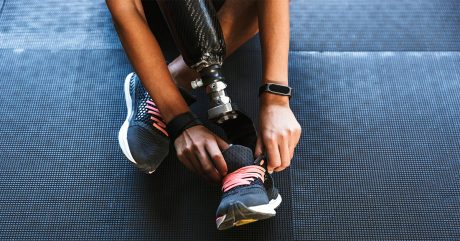
While some prosthetics are multifunctional, no single device is suitable for all situations. For example, a prosthesis that works well for everyday use may not be waterproof and therefore unsuitable for showering or water‑based activities. Others may be ideal for sport but too heavy or impractical for prolonged daily wear.
Access to activity‑specific prosthetics can be transformative. It enables people living with limb loss or limb difference to take part in work, exercise, leisure activities and family life, supporting both physical wellbeing and emotional independence.
Case study: how multiple prosthetics supported our client’s rehabilitation
The benefits of having access to a range of prosthetics were seen first‑hand when Huseyin assisted Nichola Fosler on a claim for our client, Callum.
Callum sustained a below‑knee amputation following an accident at work in August 2023. Before his injury, he led a busy and active life. He enjoyed his job and planned to retrain as a welder. Callum was training for the Southampton Half Marathon, he volunteered as a Cub leader and regularly attended the gym. He also took part in kayaking through the Scouts.
Like many clients, Callum was determined to return to his pre‑injury activities following rehabilitation. During the course of his claim, our team secured access to a range of prosthetics tailored to his needs, including:
- an everyday prosthesis, fitted with a cosmetic cover for general daily activities
- a microprocessor foot, enabling Callum to walk longer distances with reduced fatigue
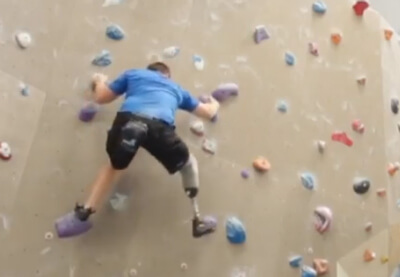
- a sports prosthesis, allowing him to return to the gym and other sporting activities
- a water‑activity prosthesis, supporting his return to kayaking
- a work‑specific prosthesis, adapted to meet the physical demands of his role and enabling him to resume employment.
The impact and recovery
Access to a range of prosthetics had a profoundly positive impact on Callum’s quality of life. It enabled him to regain independence, return to work and re‑engage with his community and interests.
The cost barrier and why access remains unequal
Specialist prosthetics can be costly. While funding may be available through personal injury claims, cost remains a significant barrier for many people without access to litigation. Improving accessibility to activity‑specific prosthetics is therefore not only a legal issue but also a wider public policy challenge that deserves greater attention.
Huseyin comments: “True rehabilitation is about more than learning to walk again. It is about giving people the tools they need to live independently, pursue their interests and regain control over their lives.”
Our client stories: Life beyond injury
The aftermath of an amputation or sustaining limb loss can be a daunting time for our clients and their families as they try to visualise what their future holds. Our role is to support our clients every step of the way in their Life Beyond Injury.
Some of the clients we have helped have decided to tell their personal stories of Life Beyond Injury. Each one of them has had to undergo their own journey of rehabilitation and adaptation, and all have gone on to live full and active lives.
Leah’s story
Our clients, Leah Washington-Pugh and Joe Pugh, were injured in the Smiler rollercoaster crash at the Alton Towers theme park in 2015.
Last year, as they approached the 10th anniversary of the incident, they looked back at that day, their recovery and the challenges they overcame, and reflected on how far they have come together.
Gary’s story
Gary was a lorry driver who experienced an electric shock while working near power lines. As a result, he required a below-knee amputation. Having at first sought to return to the job he loved and the freedom it afforded, Gary has now dedicated himself to working on and driving stock cars. He now looks forward to helping the next generation of drivers.
Evette’s story
Evette was injured at work, which resulted in her needing a below-knee amputation. In this video, she tells her story alongside Anjali Krishnan, a partner in our Personal Injury team.
Joe’s story
Our client, Joe, reached a significant milestone in his rehabilitation by returning to Jersey after a road traffic collision in Belgium in January 2024. The incident resulted in life‑changing injuries, including the amputation of both of his legs.
D’s story
Our client, D, sustained multiple amputations as a toddler due to a hospital’s failure to recognise the signs of toxic shock syndrome. Following early admissions of liability by the defendant, significant interim payments over the following years have allowed D and his family to access the support they need to ensure his ongoing needs are met until his long-term prognosis can be determined. You can read more about D’s £2.9m settlement here.
How personal injury claims can support access to prosthetics
Stewarts’ Personal Injury team acts exclusively for people who have sustained serious and life‑changing injuries. We are recognised for our specialist expertise in complex claims and our focus on securing the support clients need to rebuild their lives. If you or a loved one has experienced limb loss or limb difference, our specialist team can advise on rehabilitation, prosthetic access and legal support.
Our approach goes beyond compensation alone. We work closely with clients, families, medical professionals and rehabilitation experts to ensure early access to treatment, specialist equipment and long‑term support tailored to individual needs.
For clients living with limb loss or limb difference, this includes securing funding for appropriate, activity‑specific prosthetics where needed, helping them regain independence, return to work where possible and re‑engage with the activities that matter most to them.
If you or a family member has sustained a serious injury, our specialist team can provide clear, confidential advice at every stage.
Our partnerships
We work closely with organisations such as LimbPower, which supports amputees through sport and physical activity.
Our soundbites episodes on prosthetics, limb loss and rehabilitation:
- Stewarts Soundbites The benefits of using an amputee specialist case manager
- Stewarts Soundbites: Sports Opportunities for Amputees
- Stewarts Soundbites: Exploring Developments in Upper Limb Technology with Colette Shaw
- Stewarts Soundbites: The use of robotic exoskeletons in upper limb rehabilitation